
Winnipeg, the capital of Manitoba, is known for its museums, green spaces, and harsh winters. But the city also has another side: strange, almost forgotten landscapes of industrial history. One such place is the so-called cement graveyard, located on a deserted plot north of the airport. It is an unusual open space where dozens of concrete pillars form regular geometric rows. Long a source of discussion and urban legends, today the site attracts industrial tourism enthusiasts, photographers, and those interested in seeing a rare fragment of Manitoba’s economic history.
Below is a brief overview of the site:
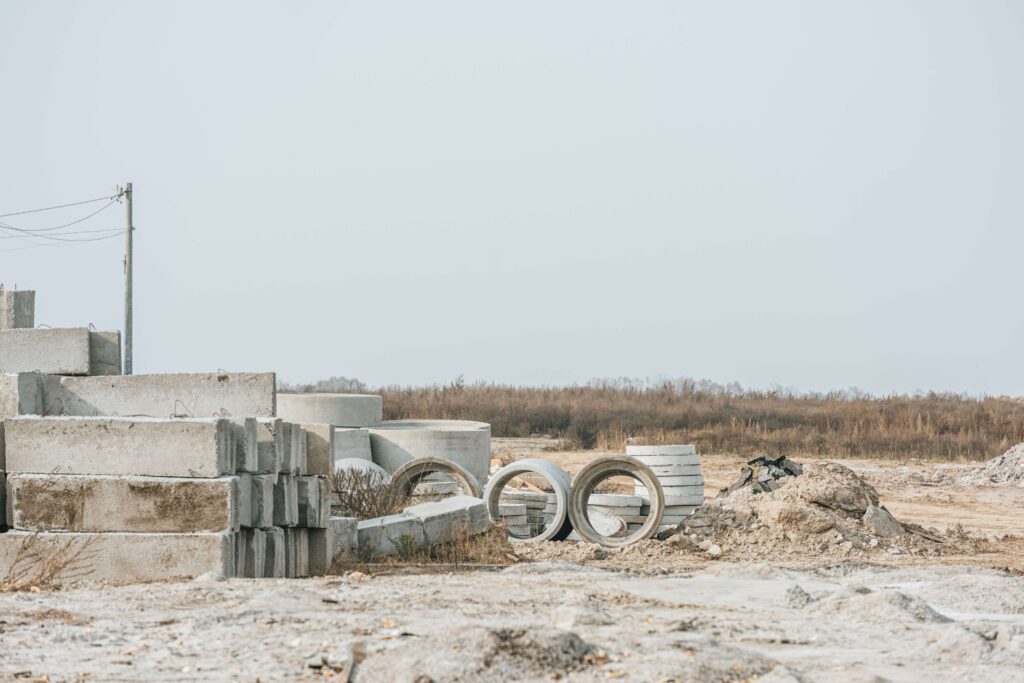
The area got its name from the concrete cylinders resembling tombstones, arranged in almost perfectly straight lines. There are about three dozen of them, and each is marked with numbers, mainly “50,” “55,” and “60,” which correspond to the height in feet. For a long time, there was no accurate information about the origin of these structures: the site was considered abandoned, with no official documentation, and there were various theories circulating on the internet, ranging from an unrealized construction project to an “artificial landscape for experiments.”
The situation changed in 2021 when the Manitoba Historical Society published a study revealing the true history of the site.
In the late 1950s and early 1960s, demand for building materials skyrocketed in Manitoba. Two large companies took advantage of this: Inland Cement and the newly merged British-American Construction and Materials Limited, formed by the merger of 31 small businesses.
Both companies sought to capture the cement supply market, but analysts warned even then that the volume of construction in the province was too small to support three large plants (including the existing Winnipeg plant).
Nevertheless, British-American decided to act aggressively and launched an experimental site to test its new cement mixture. Each concrete “column” is a test product on which the stability, structure, and durability of the material were monitored. The dates on the cylinders are the dates of manufacture of the concrete batches for long-term observation.
Testing began in late 1963, but by 1964, British-American Cement Limited had been taken over by a competitor. Production plans were scrapped, the site was abandoned, and the site itself was left deserted. The new company built another plant, which was also eventually closed.
Thus, the cement cemetery is just an industrial site forgotten after a corporate takeover.
Despite its “technical” origins, the location makes a strong visual impression.
There are four completely symmetrical hills on the site, between which concrete cylinders stand. This regular distribution creates the feeling of a spatial installation. Many photographers compare the views to scenes from science fiction or post-apocalyptic films.
Far from the road is a second group of concrete structures. It is less visible from the highway, but visually even more interesting, as you can feel the scale of the industrial design here.
The site looks particularly impressive from above. You can see:
Some local bloggers publish aerial photos as the best way to see the entire site.
Take Sturgeon Road north from Richardson International Airport. The area is part of CentrePort, a huge mixed-use territory between the city and the countryside.
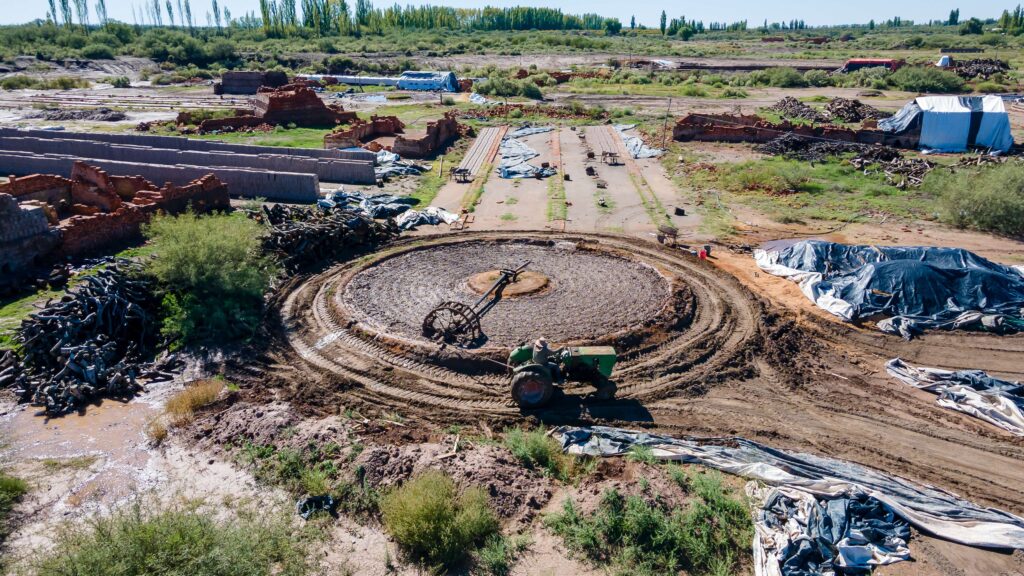
Formally, the site is located in the municipality of Rosser, but in fact it is on the outskirts of Winnipeg. The roads are partly unpaved, so in rainy weather it is better to use an SUV or be prepared for slow driving. There are virtually no signs, and the place remains a “field point,” known mainly from the stories of local residents.
The Cement Cemetery is a rare example of how a forgotten industrial site can become an unofficial tourist attraction. The site combines industrial history, unusual geometry, and the atmosphere of the deserted Manitoba prairie. It is not a classic tourist destination, but connoisseurs of industrial heritage, photographers, and travelers looking for something unusual will surely appreciate this strange and at the same time very expressive landscape.